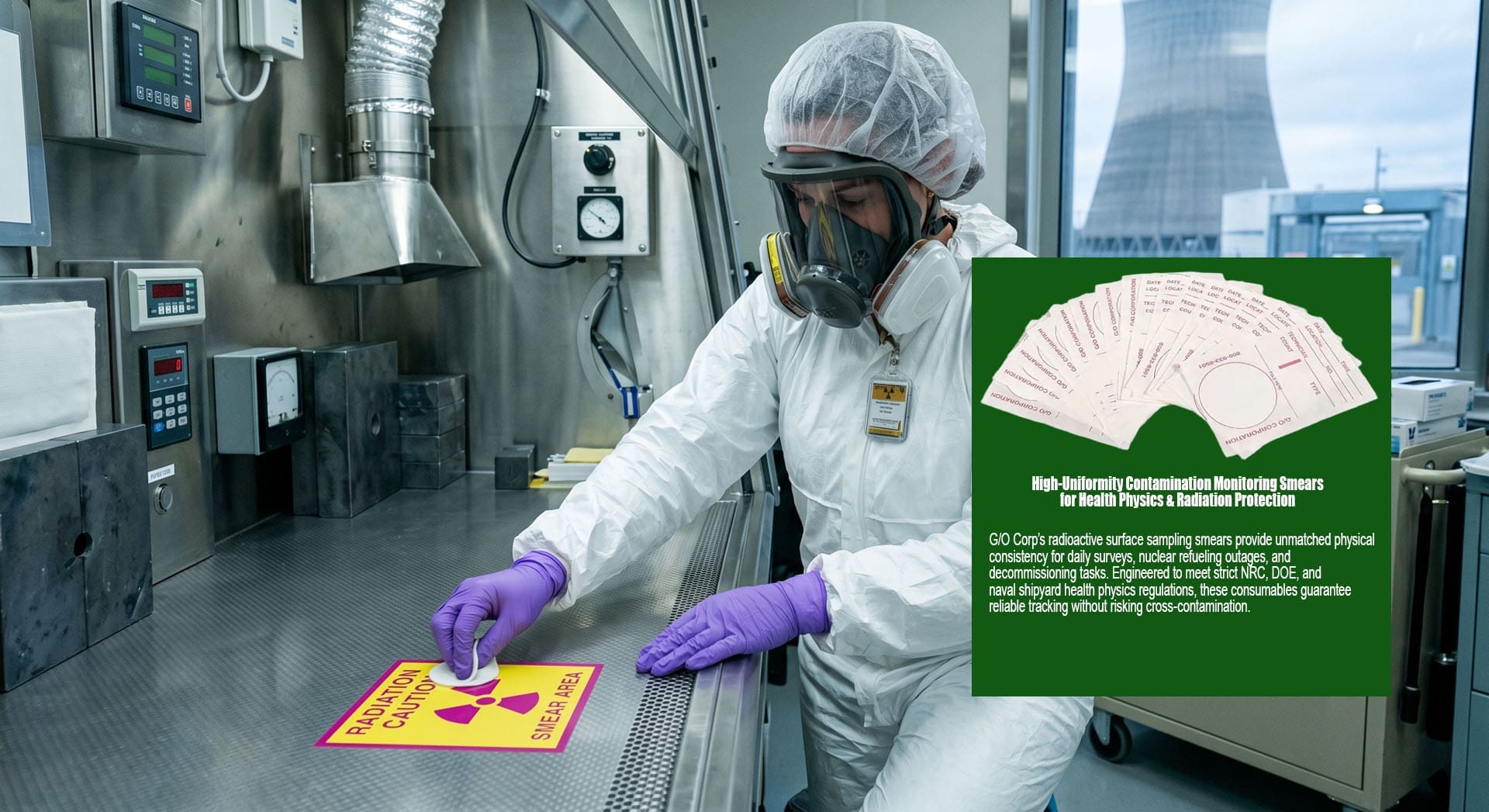
Radiological Smears: Smear Wipes for Contamination Testing
What Are Radiological Smears? A Guide to Smear Wipes for Contamination Testing Radiological smears—also called smear wipes, swipe samples, wipe-test


A dosimetry vest is a garment designed to carry radiation-monitoring devices in designated pockets. For work requiring multiple dosimeters, the right vest can help workers accommodate the monitoring locations specified by their facility’s radiation protection team.
Choosing a vest involves more than counting pockets. Buyers should consider the required monitoring locations, dosimeter fit, protective clothing, and whether separate accessories are needed. GO Corp offers dosimetry vests and accessories to help facilities put those decisions into practice.
A dosimeter provides useful information only when its selection and placement are appropriate for the exposure being evaluated. Radiation levels can vary across a worker’s body, particularly when the source is concentrated in one direction or shielding protects some areas more than others.
The NRC illustrated this problem in Information Notice 81-26, Part 3, describing work where chest-worn dosimeters underestimated exposure to workers’ heads and eyes because the principal radiation source was overhead. The notice emphasizes evaluating work conditions when deciding where monitoring devices should be worn. Read the NRC’s discussion of personnel dosimeter placement.
This 1981 notice provides historical context; its regulatory references and dose limits should not be used as current requirements. Placement decisions belong to the facility’s radiation protection personnel, based on the radiation survey, planned work, and applicable procedures.
A multi-badge dosimetry vest provides dedicated locations for carrying several monitoring devices. Its practical value is in helping organize and position those devices as part of a planned monitoring arrangement.
GO Corp’s seven-pocket dosimetry vest offers multiple pockets in a single garment. The published specification sheet describes locations at the chest, middle back, groin, both thighs, and two arm flaps. Buyers should confirm the current configuration and device fit when ordering. View the product specification sheet.
The vest holds the dosimeters; the dosimeters measure exposure. A dosimetry vest should not be treated as radiation shielding or as a replacement for other required protective equipment.
Choose the configuration that accommodates your facility’s required monitoring locations and equipment. A higher pocket count does not automatically make a vest more suitable for every task.
GO Corp lists both a four-pocket dosimetry vest and a seven-pocket model. Before selecting either, compare these factors:
| Selection factor | What to confirm |
|---|---|
| Monitoring locations | Does the actual pocket layout match the locations specified by your radiation protection team? |
| Dosimeter fit | Can each required device fit securely and be worn in its specified orientation? |
| Garment sizing | Does the vest fit properly with the clothing and protective equipment used for the task? |
| Work movements | Will bending, reaching, or the working posture affect device positioning? |
| Separate accessories | Are additional carriers needed for monitoring locations beyond the vest? |
Ask GO Corp for current specifications when comparing configurations. Your radiation protection team should determine the required monitoring arrangement before the purchase.
Accessories provide additional ways to carry dosimeters when a vest alone does not accommodate the locations specified by the monitoring plan. They should be selected for the task and approved placement, rather than added simply because more monitoring seems preferable.
A dosimetry skull cap provides a carrier option when the facility specifies a head-positioned dosimeter. Confirm how the cap and device will work with any other required headgear. A head-mounted carrier does not, by itself, establish that a dosimeter is suitable for measuring eye-lens dose.
Arm bands offer a separate carrier option when an upper-arm monitoring location is specified. GO Corp’s product sheet describes a multi-badge arm band with a pocket and hook-and-loop closure. Discuss current availability and fit with GO Corp when planning an accessory order.
GO Corp’s dosimetry wrist/ankle band uses an adjustable elastic band and a dosimeter pocket. It offers a carrier option for a wrist or ankle location when specified by the facility.
The appropriate location and detector depend on the exposure being assessed. A wrist-worn device should not automatically be assumed to represent dose to the fingers, and an ankle location is not appropriate for every lower-body exposure assessment. Follow the monitoring instructions established for the work.
Dosimetry vests and accessories can help facilities carry out an established monitoring plan by providing carriers for the selected devices. Compliance depends on the broader program, including radiation evaluations, suitable monitoring equipment, worker instructions, and dose assessment.
For NRC-regulated activities, 10 CFR 20.1501 addresses surveys and monitoring requirements, while 10 CFR 20.1502 identifies conditions requiring individual monitoring. Applicable state requirements and license conditions may also need to be considered.
The garment’s role is to support the monitoring arrangement. Purchasing a particular vest or accessory does not, by itself, establish regulatory compliance.
To make product selection easier, gather:
The monitoring locations specified by your radiation protection team.
The dimensions and wearing requirements of the dosimeters you use.
Required garment sizes and the protective clothing worn with the vest.
Any skull caps, arm bands, or wrist/ankle bands needed.
Quantities, delivery requirements, and questions about care or reuse.
Providing this information helps GO Corp discuss product options that fit your facility’s needs.

No. The vest carries monitoring devices. The dosimeters perform the measurement.
The appropriate choice depends on the required monitoring locations, pocket layout, device fit, and work conditions. Select the configuration that supports the approved monitoring plan.
Follow the facility’s monitoring instructions. The number of available pockets does not determine how many dosimeters a worker must wear.
The facility’s radiation protection or health physics personnel should establish placement based on the radiation evaluation, work conditions, applicable requirements, and device instructions.
Whether you are evaluating a seven-pocket vest or need accessories for additional monitoring locations, GO Corp’s product team can help you review available configurations, sizing, and ordering options.
Explore the seven-pocket dosimetry vest or contact GO Corp to discuss your requirements. Call (800) 933-8501 or email sales@gocorp.com to speak with our product experts.
What Are Radiological Smears? A Guide to Smear Wipes for Contamination Testing Radiological smears—also called smear wipes, swipe samples, wipe-test

Why Tamper-Evident HEPA Seals Are Critical for Nuclear & Cleanroom Compliance In high-stakes industrial environments—such as nuclear power plants, Department